Today (June 6th) being the anniversary of D-Day, I had a very dear friend, whose grandfather was present at and medalled for June 6th on the beaches of Normandy, proclaim to the world we ought to be more reflective about the forgotten details of WWII, and she suggested that the best point of entry was Ken Burn's documentary The War. Burns, being generally perceived as the conservative king of expository documentary, covers his material very carefully, but his use of voice-of-God voiceover always masks the subjectivity of his filmmaking voice. I suggested a few other WWII films I knew of that ventured into other modes, but wasn't aware of much that wrestled specifically with D-Day.
Fast forward 12 hours, and a link lands in my inbox that points me toward A Fuller Life, a documentary about Samuel Fuller, made by his daughter Samantha Fuller. From the articles, clips, and trailers I was able to dig up, it seemed to me like a perfectly postmodern approach to a very personal account of how WWII (and Normandy in particular) came to define the identity of a single human being, and how he wrestled with his war experience as a terrible muse. Samantha Fuller uses multiple modes here - performative readings of her father's autobiography by other filmmakers (a reflexive move), mixed with archival WWII footage shot by Samuel Fuller, with several shots that remind me of the techniques described by Barnouw(1) as being used in the film The Titan about Michaelangelo. Human-less shots of intimate spaces made meaningful by their connection to the context of the film and its subject.
A Fuller Life teaser from Samantha Fuller on Vimeo.
While it may not ultimately prove to be a perfect model of the Essayistic Mode; when comparing Samantha Fuller's approach to Ken Burn's, it was easy to sense that she had explored an unconventional mix of modes in telling this personal story. It's an approach that fits several of Fox's (2) descriptions of essayistic mode. "(The essayistic) mode is an active one, in which a proposed idea or question
is tested by a range of means and intersecting lines of argument." And Tim Roth's face and voice as he reads Samuel Fuller's words about Normandy ("I saw a man's mouth. Just a mouth for Christ's sake, floating in the water.") is far more nuanced and open to multiple interpretations than the authoritative voiceovers typical of Burns.
Fox proposes that the"art of great written or documentary essay hinges upon
integrating personal experience, history, and social critique with taut,
kinetic progression toward a synthesizing claim," yet he also allows that "quite often an essay does not arrive at a finite conclusion,
yet the ideas discovered during the process may reshape and reinform the
initial query in unforeseen ways." Certainly this was true of Ross McElwee's 6 O'clock News. McElwee weaved his way between personal experience, social critique, and historical events in a manner that felt cohesive, but never conclusive. He remained firmly reflexive about his role as the person asking the question, but never became more than momentarily autobiographical, the film wasn't about his personal quandary. It was about the larger idea of his quandary, as a tension universally experienced by parents, but coped with in a spectrum of ways, none of which he went so far as to endorse with his film. As opposed to an expository voice, prone to saying "This is what happened and why," McElwee's films seems to say, "Let's look together at what is happening, perhaps you can make sense of this... I certainly can't." It is a much more transparent, reflexive combination of moments.
Ultimately 6 O'clock News nails Fox's criteria for what Essayistic mode does "at its best." It fits a complement that Fox paid to Varda's The Gleaners and I, "Initial curiosity about a painting (or in this case about television news) weaves outward in an
ever-widening investigation to form a surprising humanistic tapestry, the
documentary whole far greater than the sum of its parts."
(1) Barnouw, Erik. "4. Clouded Lens; Chronicler." Documentary: A History of the Non-fiction Film. 2nd ed. New York: Oxford UP, 1993. 202-05. Print.
(2) Fox, Broderick. "Movements and Modes." Documentary Media: History, Theory, Practice. Boston: Allyn & Bacon, 2010. 40-44. Print.

Friday, June 6, 2014

Thursday, June 5, 2014
Documentary: The Case of the Grinning Cat (2004)
Chris Marker - Essayistic exploration of symbols/images/art and where they intersect with public voices and fads in activism.
Documentary: The Gleaner's and I (2000)
Agnes Varda - Essayistic Mode - Asking questions, making inconclusive connections
Wednesday, June 4, 2014
Documentary: Six O'Clock News (1996)
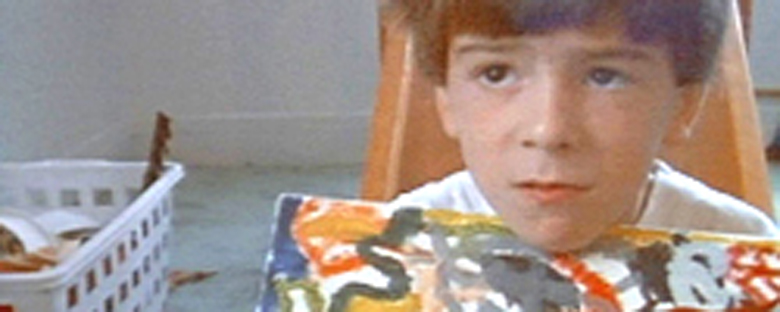
Ross McElwee - essayistic quandary about tragedy on global and personal scales.
Monday, June 2, 2014
Documentary Online Response #7: Autobiographical Mode

Our in-class conversations about the Autobiographical Mode
had my mind regularly revisiting the writing of Dr. Brene Brown, who
specializes on the mechanics of vulnerability and shame, which are hot spots
that an autobiographical film seems destined to have to deal with. In her book Daring Greatly Dr. Brown wrote “If we can share our story with someone who responds
with empathy and understanding, shame can't survive.”
When
crafted with care, it seems that an Autobiographical documentary is ideally
constructed to foster the kind of empathy and understanding that would counter
or destroy the threat of shame that might make such a vulnerable enterprise
become too vulnerable to undertake. Describing Vanalyne Green’s Saddle Sores: A Blue Western (1998), Fox(41) says that “Putting her own face (and body) onto the taboo subject of sexually
transmitted disease, Green disarms us, makes us laugh, and ultimately prompts
us to think… exploring public taboos about venereal disease and perception of
the diseased…”

This process described by Fox seems like a template for
effectively approaching a topic typically judged harshly or dismissed. First, the filmmaker disarms their audience
through the transparent subjectivity of their story. By completely foregoing any “voice of
authority,” the filmmaker disarms the audience from their prejudices of what is
and is not “knowledge,” rendering friction between opinions moot, because the
filmmaker is not sharing their “opinion” per se, but rather their “lived
experience,” which is not so easily argued against. This disarmament was also prevalent in 51
Birch Street, where Doug Block’s premise of telling about his own family of
origin set the stage for exploring more universal frictions.

Secondly, Fox credited Green with making her audience laugh,
which has been a key to constructing a sympathetic character throughout most of
the history of narrative. Once an
audience is primed not to resist the filmmaker because of the filmmaker’s claim
of subjectivity, they are then helped to invest in the filmmaker’s subjectivity
as the character of the filmmaker in their own film becomes a sympathetic
one. The usefulness of this tactic was
well illustrated in McElwee’s Sherman’s March, as McElwee several times dwelt
on the humor of his situation through visual irony, timing of sound, and a
general sense of the character and thought processes behind the person to whom
all commentary to the camera was addressed.
Once arguments against the film’s perspective are disarmed,
and the filmmaker’s voice is rendered sympathetic, the autobiographical film
becomes uniquely poised to “prompt us to think” about situations and
perspectives that a viewer might otherwise have been prone to dismiss.
Certainly this seemed to be the goal of
Rea Tajiri’s History and Memory:
to re-orient the viewer’s sense of history to include an often omitted chapter,
one to which many people might have had a defensive answer in place, had Tajiri’s
film had any pretense of objectivity.
Thus her film becomes an effective vehicle for provoking thoughtful
reflection on an oppressed and choleric perspective, allowing a vulnerable
story to be told in a way that shields it from shameful repercussions
Fox, Broderick. "Movements and Modes." Documentary Media: History, Theory, Practice. Boston: Allyn & Bacon, 2010. 40-44. Print.
Fox, Broderick. "Movements and Modes." Documentary Media: History, Theory, Practice. Boston: Allyn & Bacon, 2010. 40-44. Print.
Documentary: History and Memory: For Akiko and Takashige (1992)
Clip available here. Somewhere between Performative, Poetic, and Autobiographical.
Documentary: Scott Christopherson
In class we watched his film "Convert", but also discussed this project in the context of autobiographical documentary.
Only the Pizza Man Knows from Scott Christopherson on Vimeo.
Only the Pizza Man Knows from Scott Christopherson on Vimeo.
Subscribe to:
Posts (Atom)