Showing posts with label Media Industry. Show all posts

Tuesday, July 29, 2014

Narrative Assignment: (500) Days of Summer Scene

(The components of my lesson plan can all be found here)

In an attempt to illustrate the constructed nature of narrative dialogue, my plan is to begin by introducing students to this clip.

Following which, we watch it again, with a shot-analysis to pull us out of our suture, and to help us see how many different camera set-ups are contributing to this scene. 

At which point, the students are each given a copy of the script for the scene, and are taught how to bracket a script.  After bracketing to suit their own direction, and creating a shot-list, they are (equipment allowing) to shoot the scene in groups of 3-4.  If they have access to and knowledge of editing software, they can edit their own scenes together.  If not, the teacher could edit together a sequence using shots from each of the groups (showing a purposeful break in continuity).  

As an advanced option, the students can intentionally break continuity by inserting something visible into each separate shot (different object for each shot).  I would recommend using something larger and more visible than the heart stickers used in my example video.  The initial plan was to use different colored ties on Tom, and different hats on Summer, but my intended bucket of props fell victim to a short person who felt that every bucket should be filled with a garden hose.  This was our improvised backup.  Ideally this process would both illustrate how narrative dialogue scenes are constructive, and help students deconstruct them while watching them, and also heighten their awareness of continuity issues in production, and the planning and attention required to maintain continuity in a completed scene.


It's kind of difficult to differentiate the importance of recognizing these concepts in a student's experience as a viewer/spectator and the importance of learning about these concepts by attempting to enact them.  It feels like there is almost a chicken and egg cycle of primacy there.  After having tried to do this, a student is far better equipped to recognize these processes in action in the media they consume, but it is conversely helpful to try to identify the processes in existing works before trying to recreate them.  In that sense, it is kind of difficult to nail down the primary learning outcomes for an activity or even a curriculum like this.  Whether the purpose is to increase media literacy, or to build skills for media production makes a difference in where focus will be spent, (and the two outcomes are not necessarily contradictory, but a focus on one over the other would change the way a unit was taught).    

Continuity Editing

(Scene from 10 Things I Hate About You)


This (^) Is the equivalent of a quick and sloppy exercise in shooting and maintaining continuity with a dialogue scene in narrative filmmaking.  By going through the process of editing it, we were all able to recognize (loud and clear) how many precautions need to be taken prior to and during shooting in order to maintain a continuity between shots that allows for fluid cuts between them.  We would have benefitted tremendously from a more concrete bracketing of the script, as well as more detailed and time-specific blocking.  We ran into trouble with inconsistent hair-twirling, and for the second half of the scene we had only 1 shot/take of Mindy to work with.  All of which could have been prevented with better pre-production, and more attentive continuity monitoring during shooting.  However, there is no better way to learn the value of watching for continuity than to have to confront the way it can ruin a scene in post-production!

Friday, July 25, 2014

Media Production Experience: Fictional Narrative Production


Cramming an "introduction" to shooting a scripted narrative into even one term would feel crazy to me.  Trying to cover it in just a couple of weeks, while necessary, has felt largely inadequate.  There's just such a lot of elements that have to come together with reasonable proficiency in order for a finished product to begin to look even moderately polished. We briefly covered a few of these: scripting, shot-lists and shooting scripts, 3/4 point lighting, continuity, 180 degree rule, and dialogue editing.  I felt that an overview of on-set and pre-production roles would have been beneficial, as well as possibly a more thorough introduction to on-set-protocols.

We've all had a difficult time trying to assess the best ways to choose the best concepts to teach in a youth classroom setting in order to provide the best value to students.  The narrative unit could easily fill an entire course, though it's highly unlikely that a non-CTE teacher would have access to cameras, lighting, editing, and sound equipment needed to really illustrate these processes to a class. (Especially a large class, where hands-on-experiences with equipment and software become more problematic).


Allowing for these limitations, I've found that most of the lesson-plan material I come up with is not best suited for a public secondary-school setting.  I'm not familiar with those environments and I am a poor judge of what would work well in them.  However, a lot of what I am able to devise would probably work well in a private or charter-school setting with a smaller class size and access to resources, or in a home-school/co-op environment.  It would also be well-suited to extra-curricular environments where the rubric becomes less of a focus and it is easier to assume that students are motivated to engage with the material.  Any of these conditions would allow for a more favorable teacher to student ratio, as well as better likelihood of being able to access the equipment and software needed to do this kind of material justice.


While I've tried to foster media-creation in my home, I'm finding that the processes involved in narrative production are too complex and require too much simultaneous enactment for me to teach with any brevity to the ages of children I have ready access to (1-8 years).  I'm not yet confident judging at what point a child would be ready to recognize all of the elements of narrative production in action at the same time.  But the impossibility of illustrating shooting for continuity without also going through the editing process is a good illustration of how complex it becomes to try to teach a single concept.  Continuity shooting requires involvement in pre-production, shooting, and post-production in order to be quite clear.  Trying to illustrate this in a hands-on-way requires some forecasting skills from a student that even many high-schoolers may find evasive.

Wednesday, July 2, 2014

Media Production Experience: Storytelling and Screenwriting

My relationship with story has evolved significantly over the last ten years.  I used to feel like stories were things you had to find, and now I view them more as a facet of reality that you have to see. Everything and everyone has a story (or many), and the trick is to draw it out, and to craft it into something emotionally compelling.  The drama in fictional stories is always informed by the stakes of lived experience.


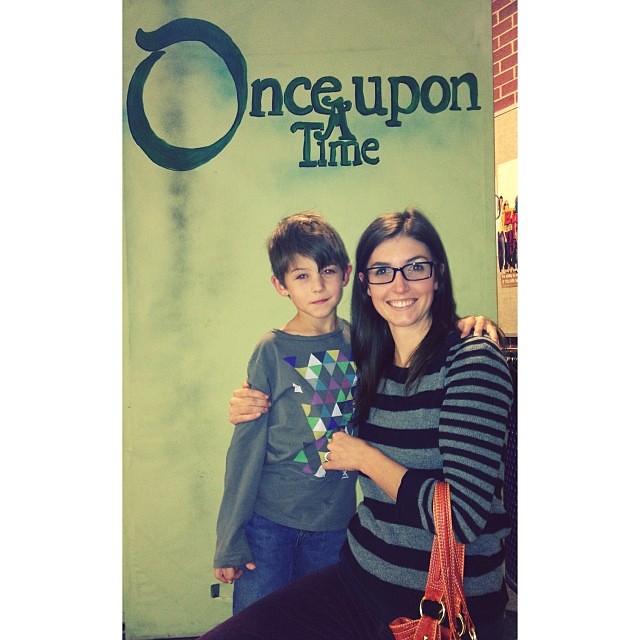
Fun date night with this boy last night to see Shrek the musical at Lehi High. Mindy, they are lucky to have you there! #sir_o #lehipioneers

Certainly one useful method of drawing out and crafting a story is to follow a traditional plot arc, and if you allow for a variety of stakes to be still worth telling a story about, then most stories with an "end" can easily land here. But a story arc and its components are not enough to explain what makes a story "work."

While I think I'm reasonably proficient at enjoying well told stories in a variety of mediums, I don't consider myself a proficient storyteller.  I blame my tendency to rush things, which can in turn be blamed on my very demanding life.  I tell a lot of stories - largely to my kids or on my languishing personal blog, but not with the sort of captivation that I recognize in stories that I love to consume.

I recognize that in my typical rushes, a large part of what I'm missing is appropriate pacing and illustrative detail. If I can draw out suspense, increase the stakes, and reveal character and do more foreshadowing through specific, sensory details, it'd go a long way.

I actually find screenwriting to be a relieved way of telling a story for me, largely because the pressure of executing visual details and of pacing would both fall to someone else in telling the actual story. But, conversely, there is a difficulty in screenwriting, in that the creator of a screenplay is not at liberty to realize their vision, and what a director perceives, followed by what is actually produced are both bound to differ by degrees from a writer's original thought.  The decrease in ownership of the story is potentially complicated.

However, for the purposes of this class, nobody but myself is likely to have a desire to execute anything I write, so I can write as though I am creating an outline for myself, in an effort to organize a conceptual story into an executable project.  There is certainly a danger of including too little information in the screenplay under these conditions, but it seems that that would be a lesser evil than including too much.

Wednesday, January 22, 2014

This is not the revolution you think it is. Studio 60 and the structure of domination.

The 2006 pilot of the television series Studio 60 on the Sunset Strip lays out a bold and promising premise.  It purports to be laying the foundation for a revolutionary show-within-a-show.  It portends to be introducing a dynamic, countercultural piece of media, uniquely poised to succeed at authenticity where others fail, to hijack the system and turn it on its head.   “This show is going to be daringly different,” it promises.


Unfortunately, this promissory bravado seems to operate under the delusion that revolution can occur without any significant change to the superstructure.  The false premise that we can function under the same systems and get different results underlies the entire plot.  So while the show seems to promise revolution and resistance, it may be more accurately providing mere coping.  As Garnam pointed out, “It is … a question of recognizing the systemic constraints within which [people] construct their forms of cultural coping and how unemancipative these can be.”  He criticized the “tendency of cultural studies to validate all and every popular culture practice as resistance – in its desire to avoid being tarred and feathered with an elitist brush – [as being] profoundly damaging to its political project.”[1] 

Studio 60, both as a show and as a show within a show, are problematically depicted as being emancipatory and resistive, when neither actually challenge the structure of domination they function under.  Rather, because of the character of Jordan McDeere, the new president of the fictional NBS network, they are simply going to play the same game over again with a keener instinct for navigating audience work[2] to their benefit and a higher tolerance for risk of aspersion. But as Garnam pointed out “little dent will be made in domination if… nothing is done about processes of economic development,” and “no empowerment will mean much unless it is accompanied by a massive shift in control of economic resources.”  Studio 60 plays at a façade of empowerment and anti-domination without so much a second glance at the power structure of the media industry.

Inasmuch as her character seems constantly to be holistically strategizing, Jordan McDeere presents an interesting paradox.  She seems unusually adept at wielding what Garnam called “Corporate Power”, “power exercised by economic agents within these overall structural constraints, but where the ownership or control of resources provides some room for intentional strategic manouvre.”[3] Her resources in this case tend to be private information about Matt Albie and Danny Tripp’s private and professional lives, as well as better forecasting of the response to Wes Mendell’s live breakdown than her peers.  The way the episode is structured, Jordan’s heightened understanding of the functionality of the “free lunch”, “to whet the prospective audience member’s appetites and thus (1) attract and keep them attending the program…; (2) cultivate a mood conducive to favorable reaction to the advertisers’ explicit and implicit messages” allows her to see potential controversy and media buzz as a fiscal asset to her company.  But it is very clear that she is not welcoming provocative content as a form of resistance or empowerment, but as an economically minded strategy to “produce audiences to sell to the advertisers.”(Smythe)

Her character seems to have grasped that Wes Mendell’s breakdown will have suggested to media consumers that they have a problem, and that by altering the content and direction of the show in this way she is promising a fix to that problem.  It’s an effective response based on Smythe’s description of advertising and audience work, “Customers do not buy things, they buy tools to solve problems… The nature of the work done by audience power thus seems to be to the advertising free lunch combination of sensory stimuli to determine whether (s)he has the “problem” the advertiser is posing, [and] (2) is aware that there is a class of commodities which, if purchased and used will “solve” that problem… [and](3) ought to add brand x of that class of commodities to the mental or physical shopping list.” 

So while Jordan may on some level appear to be countercultural or revolutionary, she is really just upholding the same superstructure more effectively and with a better understanding of its mechanics than her more outwardly dominating, unflatteringly depicted peers.  This revolution she is orchestrating is just a flashy free lunch.


[1] Garnam, Nicholas. Political Economy and Cultural Studies: Reconciliation or Divorce? March 1993(?)
[2] Smythe, Dallas Walker.  Dependency Road: Communications, Capitalism, Consciousness, and Canada. “On the Audience Commodity and its Work.” Ablex Publishing Corporation. New Jersey, 1981.
[3] Garnam, Nicholas.  Emancipation, the Media, and Modernity.  Arguments about the Media and Social Theory. Oxford University Press. 2000.