Showing posts with label documentary exercises. Show all posts

Monday, August 11, 2014

Documentary Assignment: Documenting events and/or processes


The process of composing lesson plans has been unilaterally deflating for me, but, in creating a documentary assignment,  I encountered particular difficulty in coming up with an assignment for students that I could also complete an example of.  (My life and the spaces, events, and people I have access to are rather antithetical to the lived reality of most students mature enough to maneuver a camera and editing software.)  So the parameters of my final lesson plan are ultimately a bit more vague than I’d like.  If I were spending more time in a teaching environment, it’d be more feasible for me to complete a project along the more clearly defined parameters of my first draft of the assignment, so I think they are both useful as alternatives to one another even though they sort of reverse the process of capturing footage.  One exercise gathers interviews about a past event, while the other gathers interviews about an ongoing process, and then captures the field footage of that process afterward.  They both create an opportunity for recognizing the process of trying to match interview sound bites with the footage of the event or process that allows for appropriate contextualization and understanding.

I continue to be humbled by the process of working with equipment I’m not entirely familiar or comfortable with, and the process of filming an interview is still stressful for me.  Two of my interviews were severely compromised by my willingness to rush through setting up the shot because it felt so awkward to ask my subject to wait for me to get it just right.  The first interview I conducted was with my Aunt Heidi, and it was my first time using the Seinheisser wireless mic system with my camera.  I hadn’t had time to be trained on it before that, and I could tell on playback that the levels were too high, but I couldn’t figure out how to adjust them on the transmitter/receiver units and didn’t have a user-manual with me.  Rather than make my subject wait for me to figure it out (she was in a hurry), we just kept moving the mic further from her mouth, and she tried to speak more softly than usual.  All the microphone drama led me to forget to re-set my focus after moving the tripod, and so not only was the sound bad, but the subject was out of focus.  Bad news, and no time to re-do the interview, so I’m forced to use it despite how awful it is.  I also had problems shooting my Aunt Holly, as the light levels (coming from a window) dropped drastically almost immediately after we started shooting.  I did stop her and adjust them once, but the lighting in almost her entire interview is problematic.  I didn’t feel comfortable stopping her to adjust the lighting as often as I’d have needed to to save all the shots, so I’m still working through how I ought to have handled that.  I’m mostly concluding that it would have been better to have dealt with mixed lighting, or less-attractive lighting, and to have had the levels be more consistent than to have been at the mercy of unpredictable cloud cover. (Also, I've conceded I am too stingy with ISO, I need to think rather differently about it in video than in still photography). 
(I’m not altogether happy with the other two interviews, I think they look really blown out, even though the meter in my camera was telling me 0.  All of these things point to: Emily needs more practice. Preferably under less stressful, rushed circumstances.)

Ultimately, I think this could be a really fun unit or lesson to teach.  Especially in a time when more and more youth are actively creating media for the web, I find it exciting to think about equipping them with the skills to create more polished and engaged pieces about their own lives and the lives of those around them.  It seems like a pretty effective way for them to engage in virtual communities and invite investment from their peers and viewers, and thus a really relevant skill set for them to have.

Tuesday, June 17, 2014

Documentary Final: Helix


One of the potential strengths of any documentary, is that the process of making it forces the maker to reflect more deeply on the concept they are illustrating than they may have had cause to using other mediums. In the process of constructing an intentional metaphor, the many creative decisions that fall to the filmmaker are also positioned to ask the filmmaker many difficult questions about what they are trying to communicate.  Bill Nichols[1] noted,  “One… generalization about recurring topics in documentaries is that they involve those concepts and issues we need metaphors to describe.” This common use of the medium, to use images, subjects, juxtapositions, and audience expectations to initiate a discussion about otherwise abstract ideas, is inherent in the nature of storytelling, and doubly inherent in the nature of telling “true” stories. 

As was discussed by Nichols and by Broderick Fox[2], there are a number of fluidly categorized ways – modes – that filmmakers regularly use to present these stories or ideas to their audiences.  For this project, given the logistic constraints (mainly of time) involved in the undertaking, it seemed to be in my best interest to make as many decisions before shooting as possible.  This pre-meditated approach lent itself to an essayistic mode, combining elements of the poetic, reflexive, performative, and autobiographical modes.  

The poetic mode is perhaps an unavoidable component of essayistic documentary.  Nichols said that in poetic mode, “The filmmaker engage[s] with the film form as much as or more than with social actors.”  This prevalence of form over subject was also a component of the essayistic mode insofar as it was explored in class.  The subject, in this case myself, becomes less important than the idea, or affect being emphasized by the filmmaker’s creative decisions. 

There are reflexive moments in this project where the presence of the camera and its operator are acknowledged, as well as a certain thematic reflexivity, wherein “Reflexive documentary sets out to readjust the assumptions and expectations of its audience, more than to add new knowledge to existing categories.” (Nichols)

Large portions of this project became performative, largely out of necessity.  In order to capture the appropriate tasks and actions for this essay, many of them had to be staged.  They were all things that happen regularly without the camera present, but because it was my own life, there was no way to enter the space and capture those tasks in an observational style.  In some cases I was able to turn a camera on to capture something that was happening anyway (making my bed) but in other cases I had to stage actions, because capturing them otherwise proved prohibitive. (The laundry basket being filled was clearly staged.  Leaving my camera set up in the hall to capture an actual time lapse would almost certainly lead to the death of said camera.)

But the performative mode isn’t employed merely because of staged tasks, it’s also relevant because the staged tasks are illustrating a hypothetical idea that would be difficult to convey without some kind of embodied subject.  But given the nature of that idea and the way it is communicated, the fidelity of the featured actions has little weight to the validity of the complete piece. In this case, performative documentary “demonstrate[s] how embodied knowledge provides entry into an understanding of the more general processes at work in society.” (Nichols)

The Autobiographical elements of this film are pretty overt.  The voiceover is my voice, my words, speaking in the 1st person about my own experience.  (Though through the process of recording it multiple times and never liking how it turned out, I’m finding out how subjective and constructed that can be.)  I am the subject of many of my shots, and nearly all of the content comes from the context of my day-to-day life. I think this piece imperfectly fits Fox’s parameters for Autobiographical documentary, that ”baring one’s self to the public is at the heart of the autobiographical mode. The emotional and personal life experiences of the producer become the documented reality.”  I don’t feel that I was able to be as raw or vulnerable as the “best” autobiographical documentaries defined by Fox, wherein “the autobiographical mode not only closes the gap between photographer and subject, but also the space between filmmaker and audience – brought together through a subjective familiarity and an invitation to know the “I “ behind the camera.“

Because of that, I feel comfortable describing this piece as primarily essayistic.  Fox said that essayistic mode is “an active one, in which a proposed idea or question is tested by a range of means and intersecting lines of argument.”  This film does not entirely fit the template of “an experiment” as outlined by Fox, but it does explore an idea thematically, rather than a story chronologically. 

If the “written or documentary essay hinges upon integrating personal experience, history, and social critique with taut, kinetic progression toward a synthesizing claim.” (Fox) then I think that is where this piece ultimately fits best.  The synthesizing claim made here is a pretty abstract idea, and a lot of the nuance of it is communicated non-verbally. But ultimately, the entire film progresses to support a reflection on it.  (At least that was my intent.)

My intent, if it is relevant for a viewer, was to compose a media essay about how and whether there is value in repeated, prosaic tasks.  Such endeavors make up a majority of my days and this created for me a meaningful way to reflect on content I had suitable access to for filming.  This project allowed me to further a democratizing idea that acts don’t have to be extraordinary to be worth telling a story about.


[1] Nichols, Bill. Introduction to Documentary. 2nd ed. Bloomington: Indiana UP, 2010. Print.
[2] Fox, Broderick. "Movements and Modes." Documentary Media: History, Theory, Practice. Boston: Allyn & Bacon, 2010. 40-44. Print.

Tuesday, June 10, 2014

Documentary: Mode Activity 3


This doc mode assignment consists of the exposition for my final project.  The modes I was trying most to embody were autobiographical, performative, and essayistic.  There are also moments of observational mode, and a few reflexive moments, so if the ultimate result succeeds in being essayistic, then I’ve successfully embraced the marriage of modes that Fox attributed to essayistic documentaries.

The autobiographical elements are obvious.  The content for these shots come from my real-life.  About half of them are reenactments of things I actually do on a normal basis, and the other half are me turning the camera on things that were going to happen anyway, although they inevitably happened differently with a camera rolling, if only because we had to pause to set it up and press record.

Also, I feel that because the images here become subservient to the voice-over, that the shots take on a performative mode within the context of the whole piece (this may become more apparent in the final film, where there are more whole-heartedly performative elements).  The shots of daily tasks become more about an essayistic idea being conveyed than about my particular unique experience.  At least I hope I ultimately manage that.  I’m trying to emphasize the universality of my experience, rather than the singularity of it.  The voiceover feels like the element that ultimately renders the essayistic mode dominant for this piece, though that may be a stronger thread running through the finished piece than it is through this exposition.


I did find the autobiographical mode, turning the camera on myself, to be an intensely tricky endeavor.  When I’m the one authoring the piece, and I’m also the one providing almost all of the social acting, figuring out both what I want to capture and how I’m going to provide it for myself, there is an internal conflict of interest in everything I do. With limited control over my environment anyway, to be torn between my embedded social acting -trying to manage how I am perceived - and my need to portray myself as a character - having less concern about how I am perceived than about how best to tell the story – was an exercise in extreme discomfort and awkwardness.

Thursday, May 29, 2014

Documentary: Mode Activity 2


There was a substantial learning curve in store for me as I headed into this project with a concrete idea for an expository documentary piece.  First of all I got to encounter the roadblock of reality not matching up with my preconceived story.  I simply didn't get the reactions or the shots that I had in mind, because the illustrative moments I was counting on didn't happen.  But secondly I got the experience, appropriate for an expository project, of determining what story did exist in the footage I had captured, and of finding a way to be as transparent as I could with my audience about the whole experience.  Despite an appearance of "honesty" or disclosure in this piece, I still had power over what was included and excluded, so it was enlightening to see how something that can appear so raw can still be so thoroughly constructed. (Though frankly- half-constructed here; my audio and transitions are awfully rough.)

My original concept here was to be clever and explore the process of watching a documentary.  I was planning on an animated subject, giving me somewhat explosive, highly charged responses that would be easy to inject the meanings of my choice into.  Instead I got the most solemn and still face I've ever seen on my subject (Mary Ila) for the entire hour duration of the film she watched.  I had to figure out what to do with it, and since I was already intending to create something reflexive, I got to be reflexive about the process of filming and interviewing her (and even the process of trying to interview myself, which - sheesh.) It seems like this "what went wrong" formula may be likely to surface in expository documentaries, as it becomes the most available vehicle for constructing a story when your original plan falls through.

So ultimately I suppose I've created a cautionary tale here about interviewing the hearing impaired. There are certainly complications revealed here about the process that I didn't think to anticipate before I began the interview. Ultimately that experience of realizing what it is you don't know while you're on your feet, trying to create something, is really kind of stunningly informative; a most thorough way to learn.

Sunday, May 18, 2014

Documentary: Mode Activity 1

(Expository/Observational/Poetic Mode)


Documentarist's Statement

Due in large part to time constraints, I did not write, record, and add a voiceover narrative to this piece.  I could have easily transformed this into a straightforward use of either expository mode or an essayistic version of the poetic mode with a voiceover, depending on what approach I might have taken. I could have described my son's activities with the sterile voice of an anthropologist, or with the sentimentality of a mother-poet. (I think it would be interesting to have him describe his own actions, but that would push the project into other modes).  The use of a music soundtrack could have also easily lent poetic voice to the piece, and probably helped in an effort to cover up off-camera noises.

As it is currently edited, I feel that this project aligns most with the observational mode, although because I'm the one who filmed it and edited it together, I'm keenly aware of its constructed nature, and of all the omissions, as well of how differently it could have looked if I had made different choices, especially while filming.  I'm wishing I had gotten some different perspectives - his hands coloring at their level, from a perpendicular angle, and possibly an overhead shot.  I also really wished my shots were longer when I was editing them together.  All but one of them were at least 10 seconds long, but I found I needed several longer (probably wide) shots to ground the whole piece, as well as explanatory shots for all the off-camera-noises (of which there were many.)

Because I was filming my own son, it would have been pretty impossible to have fully embraced an expository mode.  I have too much of a relationship with my subject to create a viable impression of objectivity.  But this project fits one of the descriptions of the spirit of observational filmmaking.  It contains "no voice-over commentary, no supplementary music or sound effects, no inter-titles, no historical reenactments, no behavior repeated for the camera, and not even any interviews."(Nichols.) Actually, that's not true.  We did have to repeat his entrance shot for the camera, he was too nervous about its presence the first time, and clean entrances and exits were part of the assignment.

But interestingly, Nichols claimed that "Observational films exhibit particular strength in giving a sense of the duration of actual events," and this film, in total, is about the length it would normally take my son to color this picture.  When I was filming, I found that everything took longer because my son behaved differently with the camera in the space, and was far less comfortable in his processes than he normally is. So the finished product here is a reasonably close representation of what would have happened without the camera present, while what happened with the camera present, while I was filming this, was a much more awkward and halted process.  I'm still deciding how I feel about that in the context of observational mode editing.
_________________________
Nichols, Bill. Introduction to Documentary. 2nd ed. Bloomington: Indiana UP, 2010. Print.

Wednesday, May 14, 2014

Documentary: Observation Exercise

IMG_5392April May 2014demillehomework

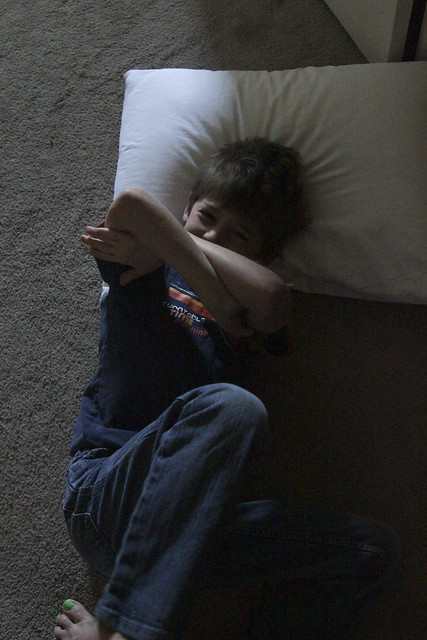
8am - this is my weekday ritual of wrestling my 7-year-old out of bed and into his clothes.  This child needs something like 13 hours of sleep to function well, so morning always comes too soon. His reticence and petulance are most evident at this time of day - just check out that body language. It's also the time of day when I rediscover, over and over again in low light, how long and lithe this body has become that I once built inside of me.

IMG_5395April May 2014demillehomework

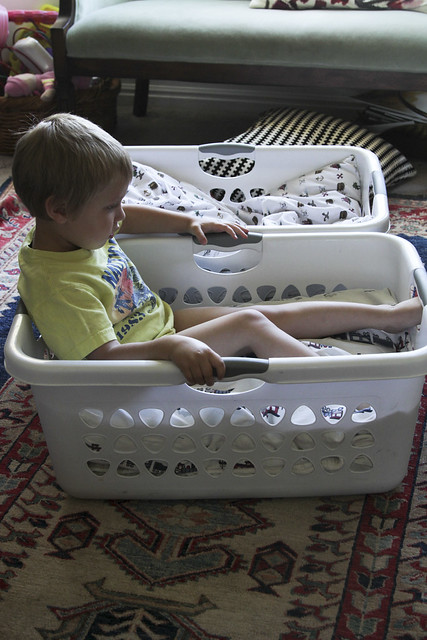
9:30am - my younger two boys have been told that they cannot play video games unless they can agree on what to play in advance.  That proved too difficult, so they resorted to pretending the laundry baskets are rocket ships again.  (Which may have been my plan all along.) My 3-year-old is potty training, so he only wears pants when he leaves the house. His little legs have lost most of their baby fat (that light on his legs!), but he's still got it in his cheeks.  And he still fits in a laundry basket.

IMG_5400April May 2014demillehomework

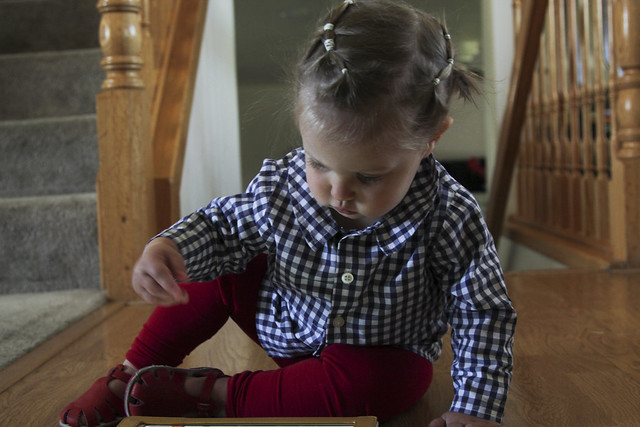
We call her Bunny, and despite being only 18-months-old, she has developed a radar for portable electronic devices and she gets laser-beam-intent on figuring out how to navigate them, while sitting on the kitchen floor.  Such a digital native. Also - this captures the conundrum of her hair really well.  She won't hold still enough to do a real braid, so we go through a dozen disposable hair elastics every day, and it takes up to 20 minutes to wrestle them all into her hair. The not-quite-symetry in this shot sort of complements her intensity.

IMG_5405April May 2014demillehomework

Dishes - one of the tasks I tackle multiple, multiple times every day.  Because I didn't want to try to find beauty in cleaning my boys' bathroom.  Poetry in the Prosaic. Emily in the reflection. Over and over and over.

IMG_5407April May 2014demillehomework

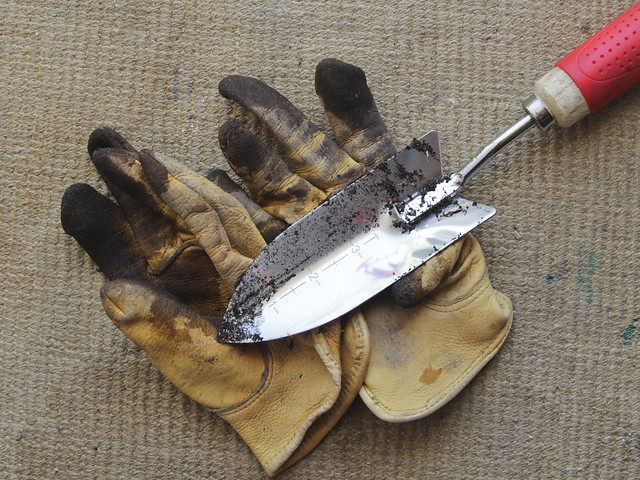
I did a lot of gardening in the late morning, mostly preparing beds and soil for planting that should have happened last week.  But the light outside was too harsh for a good photo.  So right as I was finishing I dropped my gloves and trowel on the rug in my garage and grabbed the camera.  I finally managed a photo with enough depth of field to have something in focus. I am a visual texture junkie, and so these lambskin gloves make me happy to look at.

IMG_5409April May 2014demillehomework

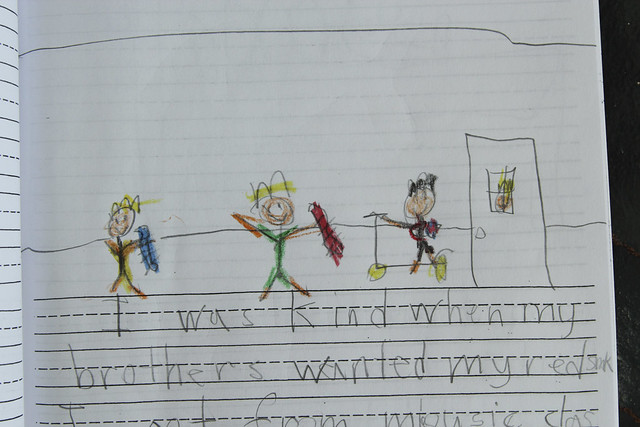
My 7-year-old came home from school with his April writing journal.  This is an entry about how he was kind when he let his younger brothers play with his plush snakes while he was at school, (he would never think to share when it was inconvenient for him - the turkey) but I love it because it captures a lot of things about our mornings.  My son has drawn himself with his red and blue star backpack and his scooter, and our neighbor that comes and waits in our front room every morning while my son drags his feet brushing his teeth and getting his jacket on is standing outside the front door.  He even drew his 5-year-old brother wearing his favorite color, green.

IMG_5410April May 2014demillehomework

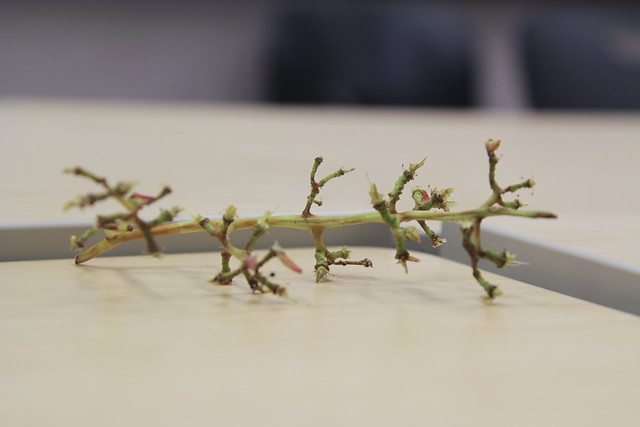
Bob left this behind after class.  Everybody stayed a few moments after Night and Fog ended to process and decompress, and I think this poor stem is a pretty apt metaphor for how emotionally bereft we all felt.

IMG_5413April May 2014demillehomework


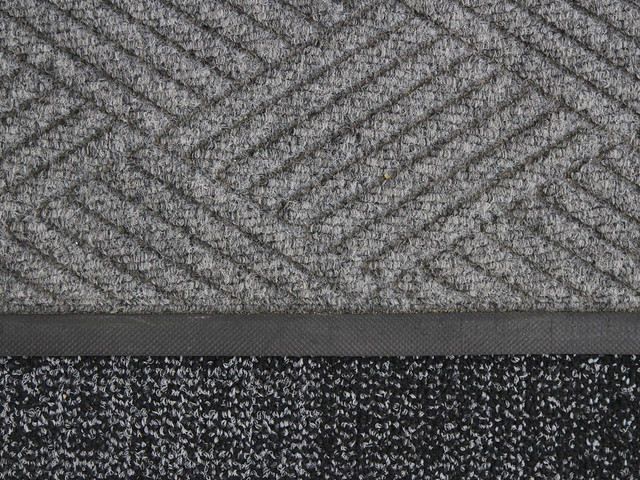
The carpet and rug at the top of the East Stairs of the D-Wing of the HFAC.  Mostly because I love all the texture going on there.  The patterns in both carpets, and the difference in frieze between the two fibers, and that nubby little strip of rubber between them.

IMG_5424April May 2014demillehomework

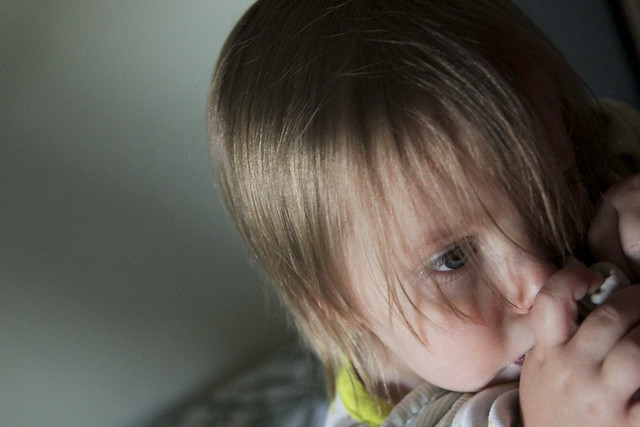
As soon as I got home from class, this girl was ready for bed.  She is a thumb-sucker of the first order.  She also has a blankie that she has attached herself to. (See the fabric between her fist and her neck? It's also under her pointer finger as she manages to simultaneously suck that thumb and rub her sweet spot on the blanket)  I also kind of love that shine in her hair, because thank-heaven my babysitter bathed everyone and got them into pajamas for me.  And the way her hair falls in her eyes is maddening in real life, but adds a lot of interest to this photo. Also - taking this photo while holding her was a trick, but it almost captures the way she clings to me when I'm coming and going.  I am her third comfort item.

IMG_5440April May 2014demillehomework

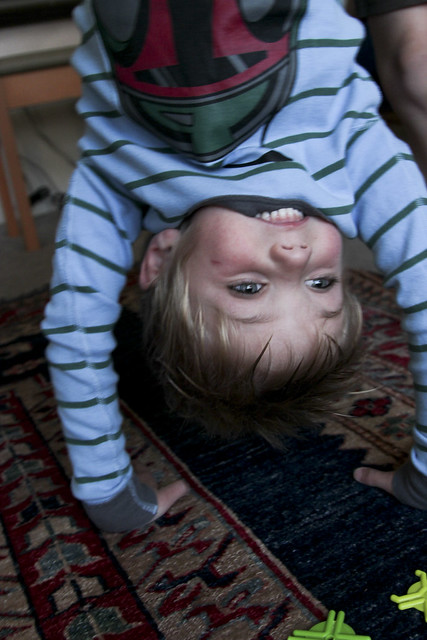
My 5-year-old, and his joy-face, upside down, hair still wet from his bath. Chewing on his shirt, and his scar on his cheek from the stitches he had to get after splitting his face open in preschool a while back - all reminders of his apraxia. I don't see the scar when I look at him anymore, but I see it when I'm looking at photos. And yes - those are Boba Fett pajamas, and they are compounding his joy. He was facing the window at this moment, and the outer light is complementing his inner light really well.  See those catchlights in his eyes?

IMG_5450April May 2014demillehomework

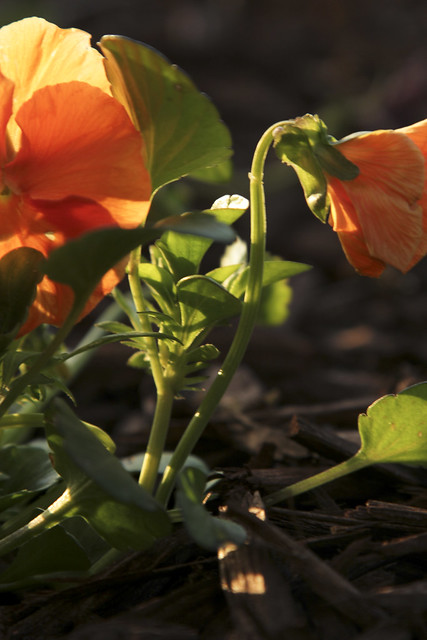
While my boys were doing gymnastics in the living room, I looked out the front window and noticed that the setting sun was backlighting these pansies so they sort of glowed.  I hoard moments like that in a special spot in my brain, a reserve for when life seems colorless. I had to set the camera on the ground, back it up for focus and zoom in to get a shot, but I think it captures some of the luminescence that was happening.


IMG_5343April May 2014demillegarden

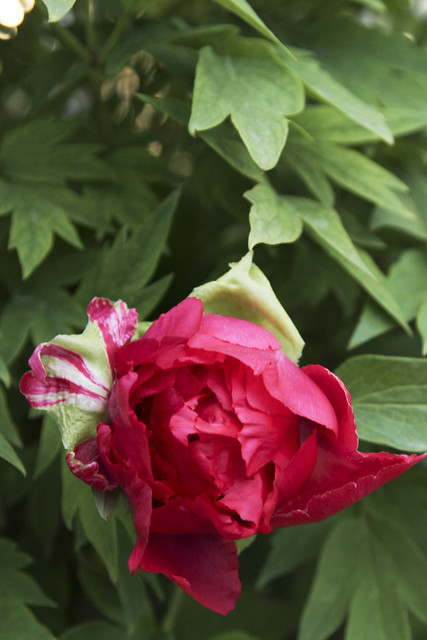
And while I was in the front yard, I also got a shot of my tree peonies, because they are gorgeous, but they last about 3 days. Fleeting, fleeting ruffley things, in the most electric shade of pink. The idea that this photograph will infinitely outlive its subject is a microcosm of the nature of photographic evidence.  Almost all photographic images can outlive their live subjects. Not only will this moment pass, and this flower pass, but ultimately this photographer will pass too. So this record of what I saw is also a record of me.